Workshop Overview
Hosted by: Beihang University
Location: Beijing, China (Beihang University)
Date: July 17, 2026
Workshop Co-chairs
Brief Introduction
Artificial Intelligence has become a core driving force reshaping business operation, consumer behavior, corporate decision-making and industrial digitalization. This workshop gathers scholars from top universities to share cutting-edge empirical research, algorithm modeling and data-driven findings covering human-AI collaboration, short-video marketing analytics, venture capital social network mining, and AI-enabled digital mental health diagnosis. The panel discussion focuses on multi-scenario business AI applications, explores theoretical mechanisms, technical implementation paths and practical value of AI in diverse business domains, and provides an exchange platform for researchers to discuss unresolved challenges and future research directions of business artificial intelligence.
Panel Speakers & Presentations

|
Lingli Wang
Associate Professor, Renmin University of China
Presentation Title: Effects of Algorithm Dysfunction in Human–Algorithm Collaboration: Evidence from a Field Experiment
Abstract: Algorithm Dysfunction, a phenomenon where algorithms temporarily fail to perform their tasks, is common in human-algorithm collaborations. This work empirically investigates the impact of algorithm dysfunction on collaboration performance through a field experiment in the logistic industry. The results show that algorithm dysfunction undermines collaboration performance. Notably, this negative effect does not completely recover even after the algorithm is restored to normal functioning. The occurrence of algorithm dysfunction can encourage users with a higher initial level of reliance to overcome overreliance and invest more effort in evaluating and improving algorithmic recommendations.
Bio: Lingli Wang earned her PhD in management science and engineering from Tsinghua University. Her research interests include human-AI interaction and user behavior in information systems. Her research work appears in journals such as MIS Quarterly, Information Systems Research, and Production and Operations Management.
|

|
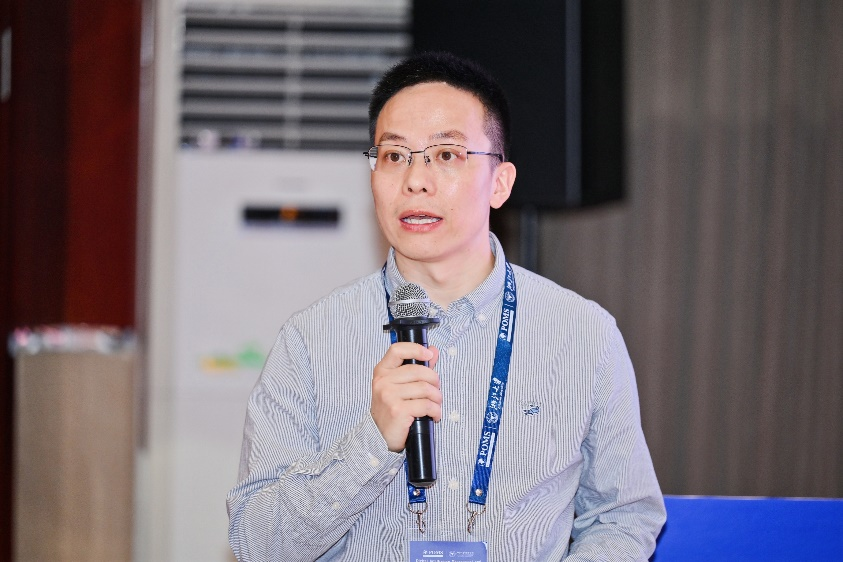
Yue Guan
Associate Professor, Communication University of China
Presentation Title: Meaning and Signal: AI Video Analytics of Sponsored Short Videos
Abstract: Sponsored videos in short-video platforms increasingly integrate brand-controlled sponsored messages into influencer-generated organic content, creating tension between brands' need to communicate commercial signals and influencers' need to maintain engaging content. Drawing on cognitive processing theory, we distinguish between semantic and sensory cues processed through different cognitive mechanisms. We find semantic congruence boosts engagement via meaning continuity, while sensory variation acts as boundary cues to segment commercial content without breaking comprehension. Analysis of Xiaohongshu dataset validates both effects, and influencer topical diversity, sponsorship frequency and entertainment content weaken the above mechanisms. This study advances influencer marketing research by balancing content consistency and commercial signaling.
Bio: Yue Guan’s research covers business intelligence, media analytics, large language models and AI agents. She has published in Information Systems Research, ACM TKDD, Decision Support Systems and other top journals. She presides over two NSFC projects, won the National Radio and Television Administration Young Innovative Talent award, and serves on the editorial board of Decision Sciences.
|
|
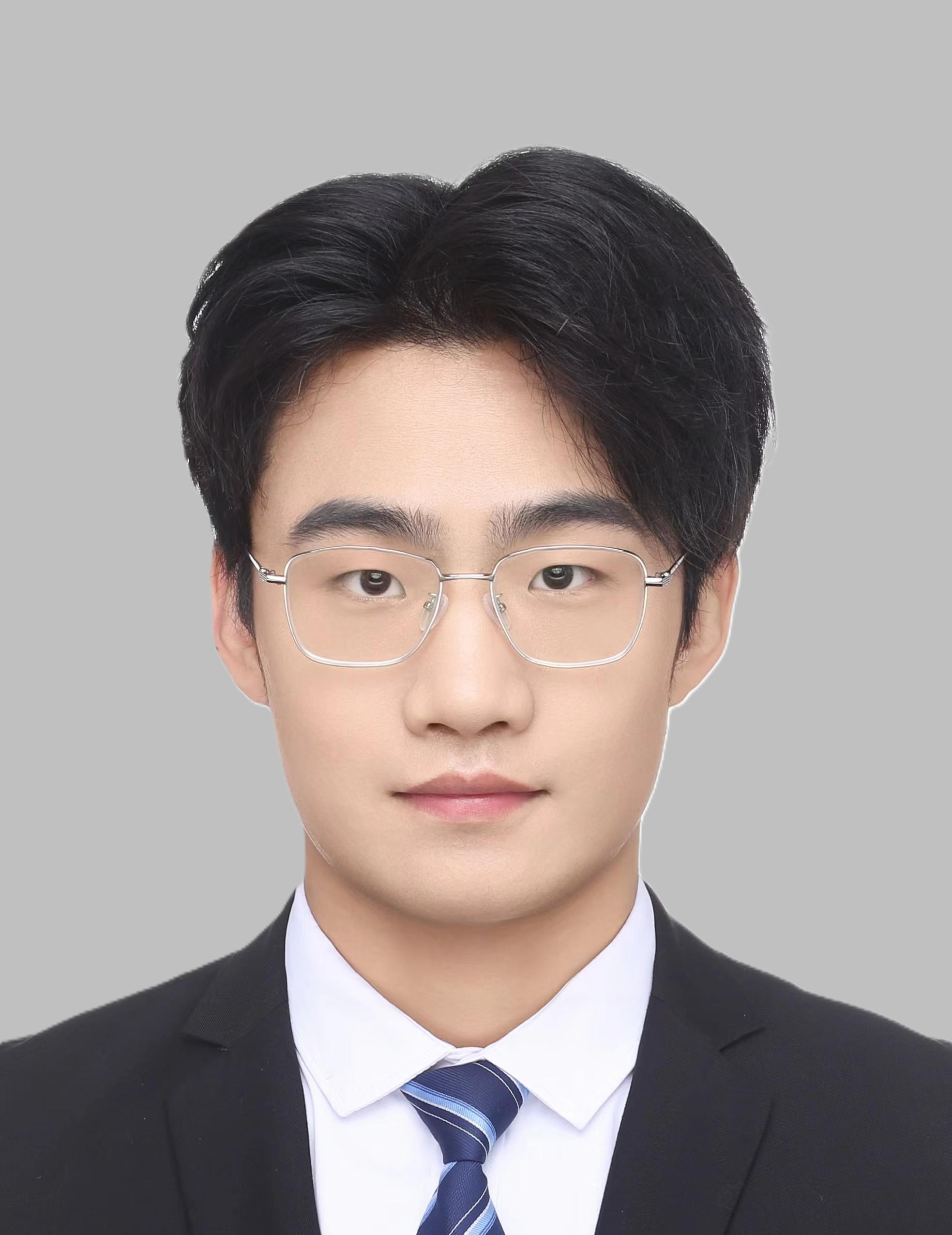
Hu Yang
Professor & Vice Dean, Central University of Finance and Economics
Presentation Title: Social Network Data-Driven Research: Formation Mechanisms of Syndicated Investments among Venture Capital Firms in China
Abstract: VC syndicated investment features complex heterogeneous network structures. Single-layer network analysis cannot fully capture cross-industry and cross-regional investment preferences of VC institutions. This research builds a multi-dimensional heterogeneous feature fusion data-driven framework to characterize VC behavioral patterns and relational embedding, and identifies core driving factors of co-investment ties, revealing the formation logic of venture capital syndication networks in China.
Bio: Hu Yang holds a PhD in Statistics from Renmin University of China, and completed visiting scholar programs at Aarhus University, University of Minnesota and Hokkaido University. His research focuses on complex data analysis, social computing and intelligent decision-making. He has undertaken over 20 national research projects including NSFC Youth Program and National Social Science Fund, and published papers in Nature, Statistics in Medicine, Information Sciences and other international journals.
|
|
Fei Peng
Assistant Researcher, Beihang University
Presentation Title: Digital Phenotyping-based Depression Detection in the Presence of Comorbidity: An Uncertainty Reasoning Approach
Abstract: Depression diagnosis faces accuracy barriers caused by overlapping symptoms of comorbid diseases. Digital phenotyping collects user sensor behavior data for automatic mental health identification, yet existing methods ignore diagnostic uncertainty from similar symptoms. This paper constructs a multi-sensor fusion deep learning model based on evidence theory to quantify diagnostic uncertainty and improve depression detection accuracy under comorbidity interference. The work contributes design science AI artifacts and optimizes mental health digital diagnosis pipelines.
Bio: Fei Peng’s research directions are digital intelligent health, data mining and computational design science. He has published more than 10 papers in JMIS, DSS, HICSS and other top journals/conferences, presides over an NSFC youth basic research project, and participates in multiple national key R&D and major NSFC programs.
|
Workshop Agenda
- Opening Remarks by Workshop Co-chairs (10 mins)
- Four Academic Panel Presentations (each 20 mins + 5 mins Q&A)
- Open Roundtable Discussion & Audience Q&A (40 mins)
|


 ICEB Home